Want to see the tools and containers I actually use? Start with Shop HOMe →


“Tiny wins, calmer rooms, and gentle resets for real-life homes.”

Gentle home organizing for real women, busy minds, and messy seasons of life.

  • What to Let Go of in January (Mentally + Physically)

    January doesn’t ask you to become a new person.
    It asks you to set things down.

    Not everything needs fixing.
    Not everything needs improving.
    Some things just need to be released—quietly, without ceremony.

    This is a January reset for mind and home, designed to feel lighter, not demanding.


    First: Let Go of the Pressure to “Start Fresh”

    The biggest thing to release in January is the idea that you need a dramatic beginning.

    You don’t need:

    • A perfect plan
    • A complete overhaul
    • A new version of yourself

    Progress doesn’t come from pressure.
    It comes from relief.


    What to Let Go of Mentally

    These are the invisible weights that make January feel heavier than it needs to be.

    1. Unrealistic Expectations

    January is cold, dark, and slow for a reason.

    Let go of expecting:

    • Peak productivity
    • Constant motivation
    • Big leaps forward

    This is a season for steady, not spectacular.


    2. The Need to Catch Up

    You are not behind.

    Let go of:

    • Guilt about last year
    • The urge to “make up for lost time”
    • Comparison to anyone else’s timeline

    You are allowed to begin from exactly where you are.


    3. All-or-Nothing Thinking

    If it can’t be done perfectly, it’s still worth doing partially.

    Let go of:

    • “If I can’t do it right, why start?”
    • Waiting for ideal conditions
    • Abandoning small wins

    Tiny progress counts.


    4. Old Narratives About Yourself

    January is a great time to retire labels.

    Let go of:

    • “I’m bad at organizing”
    • “I never follow through”
    • “This always falls apart”

    These are stories—not facts.


    What to Let Go of Physically

    Physical clutter holds mental weight. But January is not the time for emotional deep dives.

    We’re releasing what’s neutral and obvious.


    1. Leftover Holiday Excess

    This is low-hanging fruit.

    Let go of:

    • Packaging
    • Broken decor
    • Extra wrapping supplies
    • Unused seasonal items

    You’re not letting go of traditions—just the excess around them.


    2. Duplicates and Extras

    If you have more than you use, you’re carrying unnecessary weight.

    Let go of:

    • Extra mugs
    • Too many utensils
    • Duplicate tools
    • Backups you forget you own

    Keep what supports daily life.


    3. Things That No Longer Match Your Life

    Your home should reflect who you are now.

    Let go of:

    • Items from past versions of yourself
    • Aspirational clutter
    • Projects you’re no longer interested in

    You’re allowed to change.


    4. Broken, Expired, or Unused Items

    This category requires no emotion.

    Let go of:

    • Broken items waiting to be fixed
    • Expired products
    • Things you avoid using

    If it’s draining energy just by existing, it’s time.


    What to Keep (This Matters)

    Let go intentionally—but also keep with intention.

    Keep:

    • What supports your current routines
    • What you use regularly
    • What brings quiet comfort
    • What feels aligned with your life now

    Letting go creates space for ease—not emptiness.


    A Gentle January Let-Go Checklist

    Use this when you feel stuck:

    •  Release one mental expectation
    •  Clear one surface
    •  Toss one obvious no
    •  Notice the relief
    •  Stop early

    That’s enough for today.


    Why January Is About Release, Not Reinvention

    You don’t need to become someone new.
    You need to make room for who you already are.

    Letting go isn’t about loss.
    It’s about lightening your load.

    And January is the perfect time for that.


    Start the Year by Setting Things Down

    You don’t need a grand reset to begin again.
    You just need a little less weight—mentally and physically.

    Tiny releases.
    Calmer rooms.
    A steadier year ahead. 💛


    💛 Want a Gentle Rhythm That Supports This?

    The Daily 5 / Weekly 20 / Monthly 60 Method helps you maintain this lighter feeling without pressure or perfection.

    This year doesn’t need to be rushed.


    Leave a comment

  • Pantry Reset for Tired Humans

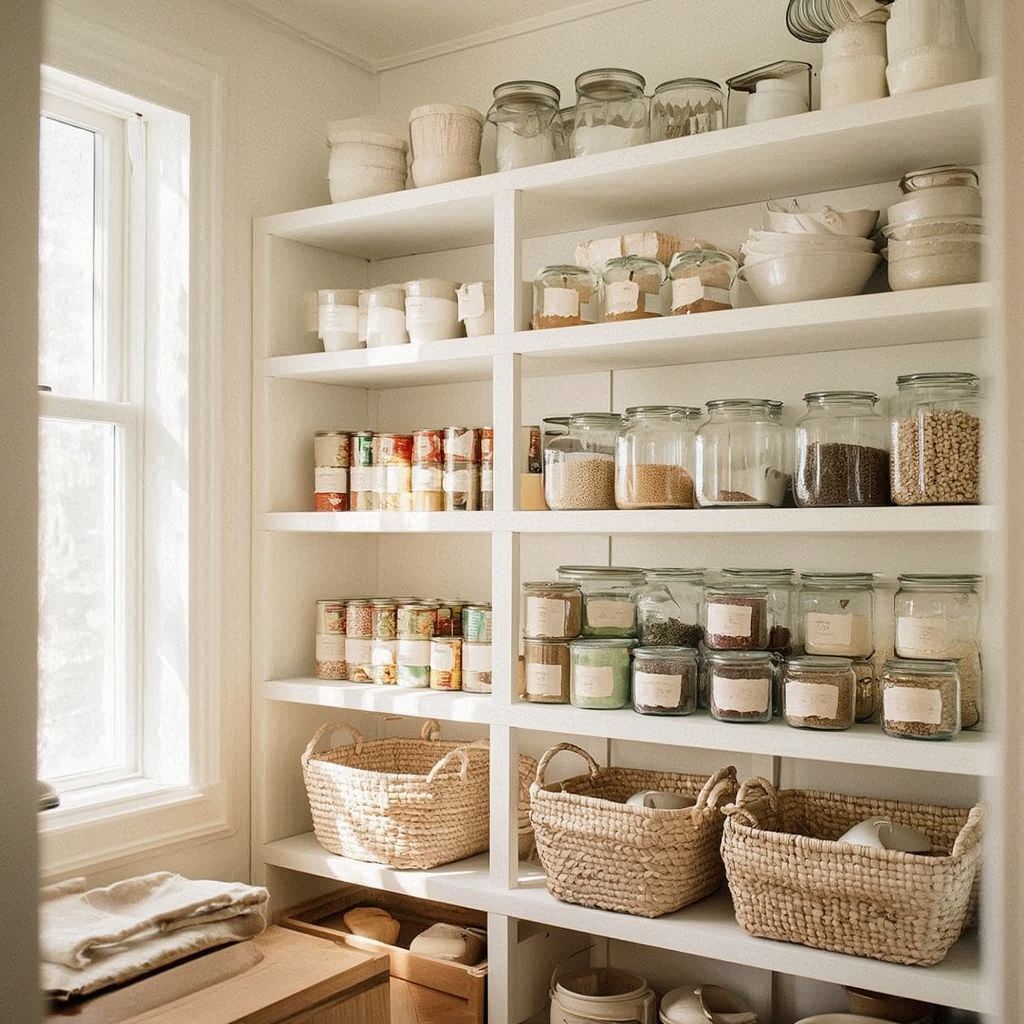
    If you’re tired, busy, overwhelmed, or just done with making decisions—this pantry reset is for you.

    This is not a color-coded, label-everything, spend-your-Saturday project.
    This is a real-life pantry reset for people who want their food to work for them, even on low-energy days.

    No perfection.
    No pressure.
    Just enough order to make eating easier again.


    Why the Pantry Feels So Hard When You’re Tired

    When you’re low on energy, the pantry becomes:

    • A decision trap
    • A guilt zone (“I should use this…”)
    • A cluttered reminder of good intentions

    And when food is hard to see or access, we default to:

    • Ordering out
    • Skipping meals
    • Eating whatever is fastest, not what feels good

    A tired pantry creates tired choices.


    The Rule: This Reset Must Reduce Decisions

    Every step of this reset should answer one question:

    Does this make eating easier?

    If it doesn’t, it doesn’t belong in this reset.


    Step 1: Clear Only What You Can See

    Do not empty the whole pantry.

    That’s a fast road to quitting.

    Instead:

    • Clear one shelf
    • Or one category
    • Or just the front row

    You are aiming for relief, not completion.


    Step 2: Toss Without Guilt

    This is not the moment for food morality.

    Let go of:

    • Expired items
    • Open packages you don’t like
    • Ingredients you’ve avoided for months
    • “Healthy” items you resent

    Food that makes you feel bad does not deserve pantry space.


    Step 3: Group by Effort Level (Not Food Type)

    This is where tired humans win.

    Instead of organizing by category, organize by how much effort it takes to use the food.

    Examples:

    • Grab & Go
    • Quick Prep
    • Cooking Required
    • Backup / Emergency

    When energy is low, you don’t need choices—you need options you can actually manage.


    Step 4: Put the Easiest Food at Eye Level

    What you see first is what you eat.

    Place:

    • Snacks you actually like
    • Simple meals
    • Easy breakfasts

    Front and center.

    High effort foods can live higher or lower. Let visibility work for you.


    Step 5: Create an “Eat This First” Zone

    This one step prevents waste and decision fatigue.

    Use:

    • A small bin
    • A basket
    • A tray

    This zone holds:

    • Open packages
    • Almost-expired items
    • Leftover snacks
    • Food you forget about

    Check this zone before buying more food.


    Step 6: Contain, Don’t Decant

    If decanting feels heavy—skip it.

    You do not need:

    • Matching containers
    • Perfect labels
    • Instagram-ready shelves

    You do need:

    • Food you can grab
    • Packages you can open
    • Storage you’ll actually maintain

    Containment beats aesthetics every time.


    Step 7: Stop Early (This Matters)

    A successful pantry reset ends before you’re exhausted.

    When you notice:

    • Clear shelves
    • Fewer decisions
    • Easier access

    You’re done.

    You can always come back later—without starting over.


    What This Pantry Reset Is Not

    Let’s clear this up:

    ❌ Not a deep clean
    ❌ Not a full inventory
    ❌ Not a “start cooking from scratch” plan
    ❌ Not a test of discipline

    This is about making food easier when life is heavy.


    A Simple Pantry Reset Checklist

    Use this when energy is low:

    •  Clear one shelf
    •  Toss obvious no’s
    •  Group by effort level
    •  Move easy food forward
    •  Create an Eat This First zone
    •  Stop early

    Tiny wins count.


    Why This Works for Tired Humans

    Because:

    • It respects low energy
    • It reduces daily decisions
    • It supports real eating habits
    • It removes guilt from food storage

    A pantry should support you—not judge you.


    You Don’t Need a Perfect Pantry

    You need a pantry that:

    • Helps you eat
    • Saves you time
    • Reduces stress
    • Works on hard days

    If your pantry does that, it’s already a success.

    Tiny wins.
    Calmer rooms.
    Even when you’re tired. 💛


    💛 Want a Simple Rhythm That Keeps This From Slipping?

    Pair this reset with the Daily 5 / Weekly 20 / Monthly 60 Method to keep your pantry usable without ever doing a full overhaul again.

    Your energy matters.


    Leave a comment

  • Why the Entryway Falls Apart in Winter

    Entryway Reset for Snowy, Muddy, Real Life

    Your entryway is not failing you.
    Winter is just doing what winter does.

    Snow, slush, boots, backpacks, wet coats, dog leashes, gloves that never match—this space takes the hit every single day. Expecting it to stay tidy without a system built for real winter life is unrealistic.

    This reset isn’t about making your entryway look perfect.
    It’s about making it work.


    Why the Entryway Falls Apart in Winter

    Winter adds layers—literally and figuratively.

    Suddenly your entryway is handling:

    • Wet boots
    • Heavy coats
    • Extra accessories
    • Mud, salt, and snow
    • People coming in fast and cold

    If your entryway system was built for fair weather, it’s going to collapse in January. That doesn’t mean you need a new house—it means you need a seasonal reset.


    The Winter Entryway Rule

    Let’s set the tone:

    Contain the mess. Don’t fight it.

    Snowy, muddy entryways don’t stay clean.
    They stay contained.

    Your goal is to:

    • Catch wet items
    • Create obvious drop zones
    • Make cleanup fast and repeatable

    Step 1: Lower the Bar (On Purpose)

    Winter entryways are allowed to look used.

    That means:

    • Some shoes out
    • A few coats visible
    • A basket that’s not Pinterest-perfect

    What we’re removing is chaos, not evidence of life.


    Step 2: Create a Wet Zone

    This is non-negotiable.

    Choose one spot where wet things are allowed to land.

    Options:

    • Boot tray
    • Rubber mat
    • Old towel layered under a tray
    • Shallow bin near the doorEverything wet goes here—no wandering boots.
    • If water has a place to go, the mess stops spreading.


    Step 3: Limit Shoes (This Is Key)

    Most entryway overload comes from too many shoes.

    Winter rule of thumb:

    • 1–2 pairs per person by the door
    • Everything else lives somewhere else

    Use:

    • A basket
    • A low shelf
    • A bench with cubbies

    Fewer shoes = faster resets.


    Step 4: Hooks Beat Hangers in Winter

    Hooks not hangers

    Heavy coats don’t belong in closets you can’t reach quickly.

    Wall hooks:

    • Dry coats faster
    • Are easier for kids
    • Prevent piles on chairs
    • Reduce decision fatigue

    Assign hooks loosely if needed—but don’t over-organize. Winter favors speed.


    Step 5: One Catch-All Basket (Only One)

    Winter Gear

    Every entryway needs a single, intentional mess basket.

    This is where:

    • Gloves
    • Hats
    • Scarves
    • Random winter accessories land

    No sorting required.
    Just containment.

    Once a week, dump it, dry it, reset it.


    Step 6: Add a Fast Reset Routine

    Your entryway doesn’t need deep cleaning—it needs maintenance.

    Try this:

    • Shake out mats once a week
    • Dump water trays every few days
    • Clear the basket during your Weekly 20
    • Wipe the door handle and light switch

    Five minutes keeps winter from winning.


    What to Skip Until Spring

    Give yourself permission to skip:

    • Matching bins
    • Labeling everything
    • Off-season shoe decisions
    • Aesthetic upgrades

    Winter is survival season.
    Spring is for refinement.


    A Simple Winter Entryway Checklist

    Use this as a guide, not a demand:

    •  One wet zone
    •  Limited shoes by the door
    •  Hooks for coats
    •  One catch-all basket
    •  Weekly reset

    That’s it.


    Why This Works for Real Life

    This reset works because:

    • It accepts weather reality
    • It limits decision-making
    • It contains mess instead of chasing it
    • It’s easy to maintain on cold, tired days

    Your entryway doesn’t need to be beautiful right now.
    It needs to be forgiving.


    Let Winter Be Winter (Your Entryway Can Handle It)

    A calm home doesn’t come from spotless spaces.
    It comes from systems that match the season you’re in.

    Snow melts. Mud dries.
    And with the right setup, your entryway can handle it—without constant cleanup.

    Tiny wins.
    Calmer rooms.
    Even in winter.


    💛 Want a Simple Weekly Rhythm?

    Pair this reset with the Daily 5 / Weekly 20 / Monthly 60 Method to keep winter mess contained—without ever starting over.

    Your home is allowed to work hard for you.


    Leave a comment

  • Declutter After the Holidays

    Declutter After the Holidays—Without Touching the Sentimental Stuff

    January doesn’t need to start with hard decisions.
    It doesn’t need tears, guilt, or boxes labeled “figure this out later.”

    You can absolutely declutter after the holidays without touching the sentimental stuff—and still make your home feel lighter, calmer, and easier to live in.

    This is the Happy Organized Me way:
    tiny wins, calmer rooms, and no emotional overwhelm.


    Why Post-Holiday Decluttering Feels Extra Heavy

    After the holidays, your home is usually carrying:

    • Extra decor
    • Extra stuff
    • Extra emotions

    And that combination makes traditional decluttering advice feel impossible.

    If you’ve ever thought:

    • “I can’t deal with this right now.”
    • “Everything feels connected to a memory.”
    • “I’ll do this later when I have more energy.”

    You’re not wrong. January is not the time to dig through memories.

    It is the time to clear what doesn’t require emotion at all.


    The Rule: Emotional Items Are Off-Limits

    Let’s set this boundary clearly:

    January decluttering is practical—not sentimental.

    That means:

    • No heirlooms
    • No childhood items
    • No “this reminds me of…” piles
    • No pressure to decide on keepsakes

    We’re working only with neutral clutter—the stuff that quietly adds weight without meaning.


    What Counts as Non-Sentimental Clutter

    This is your safe zone.

    Easy Yes-to-Remove Items

    • Packaging and boxes
    • Broken or mismatched items
    • Extra holiday supplies you didn’t use
    • Expired products
    • Duplicates
    • Items that belong somewhere else

    If it doesn’t trigger a memory or emotion, it’s fair game.


    Step 1: Start With Surfaces, Not Storage

    Surfaces are where clutter shouts the loudest.

    Focus on:

    • Counters
    • Coffee tables
    • Entryway surfaces
    • Bathroom counters

    Ask one simple question:

    “Does this need to live here?”

    Most of the time, the answer is no—and no emotion required.


    Step 2: Pack Away Holiday Decor With Intention

    This is not about downsizing your traditions.
    It’s about packing them away cleanly and calmly.

    As you put decor away:

    • Toss broken or tangled items
    • Group like items together
    • Label bins clearly
    • Let unused extras go

    You’re not letting go of memories—you’re protecting them by storing them well.


    Step 3: Declutter the “Invisible” Overload

    Some clutter isn’t emotional—it’s just exhausting.

    Look for:

    • Overflow paper
    • Extra bags
    • Half-used products
    • Random holiday leftovers (gift wrap scraps, tags, ribbons)

    This is clutter that steals energy quietly. Removing it brings immediate relief.


    Step 4: Contain What Stays (Without Overthinking)

    January is not the time for elaborate systems.

    Use:

    • Bins you already own
    • Simple baskets
    • Drawer dividers
    • Clear categories

    The goal is easy return, not perfection.

    If it’s simple to put away, it will stay under control.


    What to Skip in January (On Purpose)

    Give yourself permission to skip:

    • Memory bins
    • Photo sorting
    • Kids’ artwork decisions
    • Family keepsakes

    Those deserve a different season—one with more emotional bandwidth.

    Skipping them now is a smart choice, not avoidance.


    A Gentle Post-Holiday Declutter Checklist

    Use this as a guide, not a demand:

    •  Clear one main surface
    •  Toss obvious trash and packaging
    •  Pack holiday decor neatly
    •  Donate unused extras
    •  Contain what stays
    •  Stop before you’re tired

    Tiny wins matter.


    Why This Works (Without Burnout)

    This approach works because:

    • It avoids emotional fatigue
    • It creates visible calm quickly
    • It builds confidence
    • It makes January feel lighter—not heavier

    You don’t need to “deal with everything” to feel better in your home.

    You just need to start where it’s easy.


    Save the Sentimental Stuff for Later

    There will be a time to thoughtfully sort memories.

    But January is about:

    • Clearing space
    • Restoring flow
    • Resetting your environment gently

    Your memories aren’t going anywhere.
    Your energy, however, is precious.


    Start With What’s Neutral. Stop Early.

    Decluttering doesn’t have to be hard to be effective.

    When you protect your emotional energy, your home responds faster—and stays calmer longer.

    Tiny wins.
    Calmer rooms.
    No emotional overwhelm.

    That’s the Happy Organized Me way. 💛


    💛 Ready for a Simple Rhythm?

    Pair this with the Daily 5 / Weekly 20 / Monthly 60 Method to keep clutter from rebuilding—without ever touching what isn’t ready yet.

    Your home can feel lighter this week.


    Leave a comment

  • The Daily 5

    The Daily 5 / Weekly 20 / Monthly 60 Method


    Image
    Image

    The Happy Organized Me System for Tiny Wins & Calmer Rooms

    This is the rhythm we use at Happy Organized Me when we want a home that feels steady—not perfect, not rigid, and not dependent on motivation.

    The Daily 5 / Weekly 20 / Monthly 60 Method is a simple, flexible system built around tiny wins that compound into calmer rooms over time.

    No catch-up days.
    No falling behind.
    No starting over.

    Just a gentle structure that works with real life.


    The HOMe Philosophy Behind the Method

    At Happy Organized Me, we believe:

    • Calm comes from consistency, not intensity
    • Small resets done often beat big resets done rarely
    • A home should support your energy, not drain it

    This system isn’t about cleaning more.
    It’s about resetting just enough—at the right rhythm.


    The Big Picture (How the System Works)

    Think in layers:

    • Daily 5 → Keeps friction from building
    • Weekly 20 → Keeps rooms usable
    • Monthly 60 → Keeps small problems from becoming big projects

    Each layer supports the next.
    Miss one? The others carry you.

    That’s what makes this system sustainable.


    The Daily 5 (5 Minutes)

    The Daily 5 is about ending the day lighter than you started it.

    Purpose

    • Clear visual noise
    • Make tomorrow easier
    • Maintain calm without effort

    What Counts as a Daily 5

    You choose one focus and stop when five minutes are up.

    Examples:

    • Clear kitchen counters
    • Reset the sink
    • Tidy the main living space
    • Empty a catch-all tray
    • Prep tomorrow’s outfit or bag

    ✨ Tiny win rule: When the timer ends, you stop—even if you could keep going.


    The Weekly 20 (20 Minutes)

    The Weekly 20 is your maintenance reset.

    Purpose

    • Prevent pile-ups
    • Keep frequently used spaces functional
    • Lighten the mental load

    How It Works

    • Choose one room or zone
    • Set a 20-minute timer
    • Remove what doesn’t belong
    • Straighten what stays
    • Stop on time

    Good Weekly 20 zones:

    • Entryway
    • Bathroom counters
    • Fridge shelf
    • Paper pile
    • Laundry landing zone

    This is not deep organizing.
    It’s just enough to keep things flowing.


    The Monthly 60 (60 Minutes)

    The Monthly 60 is your reset safety net.

    Purpose

    • Handle what gets ignored week to week
    • Prevent clutter creep
    • Create space without overwhelm

    Examples

    • One pantry shelf
    • One bathroom drawer
    • One closet section
    • One storage bin
    • One garage corner

    One hour. One focus. One calm win.


    Choosing What to Reset (The HOMe Way)

    We don’t organize by calendar—we organize by irritation.

    Ask:

    • What do I avoid?
    • What do I sigh about?
    • What feels heavier than it should?

    That answer tells you exactly where to reset next.

    Your home always gives clues.


    Energy-Based Flexibility (No Guilt Built In)

    Low-Energy Season

    • Daily 5 only
    • Everything else is optional

    Steady Season

    • Daily 5 most days
    • One Weekly 20

    High-Energy Season

    • Daily + Weekly
    • Add a Monthly 60

    All of it counts.
    Nothing needs catching up.


    What This System Is Not

    To keep expectations clear:

    ❌ Not a cleaning schedule
    ❌ Not perfection-based
    ❌ Not all-or-nothing
    ❌ Not dependent on motivation

    This is a home rhythm, not a rulebook.


    Why This Works (Tiny Wins → Calmer Rooms)

    This system sticks because:

    • It’s short
    • It’s flexible
    • It’s repeatable
    • It creates visible relief quickly

    Tiny wins build trust.
    Trust builds consistency.
    Consistency builds calm.


    📄 Download the Full Guide PDF (Free)

    Want this laid out cleanly and clearly—with no fluff and no overwhelm?

    The Daily 5 / Weekly 20 / Monthly 60 Full Guide PDF includes:

    • A simple explanation of the system
    • Room and zone ideas
    • Energy-level options
    • Printable checklists
    • A monthly tracker page

    👉 Download the Daily 5 / Weekly 20 / Monthly 60 Full Guide PDF
    Tiny wins. Calmer rooms. Your pace.


    Start Small. Stay Steady.

    You don’t need a new routine every week.
    You don’t need to do more.

    You need a home that quietly supports you—one small reset at a time.

    This is the Happy Organized Me way.
    And it works because it fits real life. 💛


    Leave a comment

  • Weekly Home Reset

    The Daily 5 / Weekly 20 / Monthly 60 Method

    (A Full, Real-Life Guide)

    If you’ve ever felt like your home only stays calm when you’re constantly cleaning—or completely falls apart when you stop—this method was built for you.

    The Daily 5 / Weekly 20 / Monthly 60 isn’t about keeping your house perfect.
    It’s about keeping it livable, steady, and kind to your energy.

    No marathons.
    No falling behind.
    No starting over.

    Just small, repeatable resets that add up.


    Why Traditional Routines Fail

    Most home routines expect:

    • High motivation
    • Endless time
    • Consistent energy

    Real life offers:

    • Busy days
    • Low-energy weeks
    • Messes that multiply quietly

    This method works because it flexes. It gives your home what it needs when it needs it—without burnout.


    The Big Idea (Simple + Powerful)

    Think of your home like your body:

    • Daily keeps things functional
    • Weekly prevents buildup
    • Monthly handles what gets ignored

    Each layer supports the next.

    Miss a day? The system still works.
    Have a low week? The month absorbs it.

    That’s the magic.


    The Daily 5 (5 Minutes a Day)

    This is not cleaning.
    This is resetting your space for tomorrow.

    What the Daily 5 Is For

    • Visual calm
    • Clear surfaces
    • Easier mornings

    What to Do (Pick 1–2)

    You don’t need all five every day—just five minutes total.

    Examples:

    • Clear kitchen counters
    • Reset the sink
    • Tidy the main living area
    • Prep tomorrow’s outfit spot
    • Empty the “catch-all” tray

    Rule: Stop when the timer ends.

    Five minutes keeps chaos from settling in.


    The Weekly 20 (20 Minutes, Once a Week)

    This is where your home exhales.

    What the Weekly 20 Is For

    • Preventing pile-ups
    • Light maintenance
    • Keeping rooms usable

    How It Works

    Set a 20-minute timer and focus on one zone.

    Good weekly zones:

    • Entryway
    • Bathroom counters
    • Fridge shelf
    • Paper pile
    • Laundry landing zone

    Remove what doesn’t belong.
    Straighten what stays.
    Stop on time.

    You’re not cleaning everything—you’re keeping things from becoming a project.


    The Monthly 60 (60 Minutes, Once a Month)

    This is your reset safety net.

    What the Monthly 60 Is For

    • Areas that don’t need weekly attention
    • Small declutters
    • Light organizing

    Examples

    • Pantry shelf
    • Bathroom drawer
    • Closet section
    • Storage bin
    • Garage corner

    One hour. One focus. One win.

    If you only do one deep-ish thing a month, your home never fully unravels.


    How to Choose What to Reset

    Let irritation guide you.

    Ask:

    • What am I avoiding?
    • What do I sigh about?
    • What feels heavier than it should?

    That’s your next reset.

    Your home is already telling you what it needs.


    Adjusting for Energy (This Is Key)

    Low Energy Week

    • Daily 5 only
    • Skip the rest
    • That still counts

    Normal Energy Week

    • Daily 5 most days
    • One Weekly 20

    High Energy Week

    • Daily + Weekly
    • Add a Monthly 60

    No guilt. No catch-up.

    Consistency comes from flexibility.


    What This Method Is Not

    Let’s be clear:

    ❌ Not a cleaning schedule
    ❌ Not a perfection plan
    ❌ Not all-or-nothing
    ❌ Not rigid

    This is a maintenance rhythm, not a makeover.


    Why This Method Actually Sticks

    Because:

    • It respects real life
    • It doesn’t punish missed days
    • It prevents overwhelm
    • It creates visible calm quickly

    You don’t need motivation.
    You need a rhythm that works even when life doesn’t.


    Your Simple Cheat Sheet

    Daily 5 → Keep life flowing
    Weekly 20 → Prevent buildup
    Monthly 60 → Reset what’s ignored

    That’s it.


    📄 Download the Full Guide (Free PDF)

    Want this laid out clearly—one page at a time—with:

    • Room ideas
    • Energy-level options
    • Printable checklists
    • A monthly tracker

    👉 Download the Daily 5 / Weekly 20 / Monthly 60 Full Guide PDF
    (Print it, save it, stick it on your fridge—whatever helps you use it.)


    Start Small. Stay Steady.

    You don’t need a new routine every Monday.
    You don’t need to “do more.”

    You need a home that supports you quietly, consistently, and without pressure.

    This method isn’t about doing it all.

    It’s about doing enough—on purpose.

    And that’s more than enough to keep your home calm, capable, and lived in.


    Leave a comment

  • One Room in 30 Minutes

    Start Where You Are: Resetting One Room in 30 Minutes

    You don’t need a free weekend.
    You don’t need matching bins.
    You don’t need to feel “ready.”

    You just need 30 minutes—and permission to start exactly where you are.

    This reset is for the days when your home feels off but your energy is limited. It’s for real life, real homes, and real humans who want relief without the spiral.


    Why One Room Beats the Whole House

    When everything feels messy, the instinct is to fix everything. That’s when nothing gets done.

    One room:

    • Gives you visible progress
    • Restores a sense of control
    • Creates momentum
    • Builds trust with yourself

    A 30-minute reset isn’t about perfection—it’s about changing how the space feels.


    Choose the Right Room (This Matters)

    Don’t pick the messiest room.
    Pick the one that affects you most often.

    Good choices:

    • Living room you walk through all day
    • Kitchen where clutter multiplies overnight
    • Bedroom that never quite settles
    • Bathroom counter that always looks busy

    Ask yourself:

    “If this felt calmer, my day would feel easier.”

    That’s your room.


    The 30-Minute Reset Rule

    Set a timer.
    When it goes off, you stop.

    Stopping on time is part of the system—it keeps this doable and repeatable.

    Your Reset Breakdown

    • 5 minutes — Clear surfaces
    • 10 minutes — Remove what doesn’t belong
    • 10 minutes — Simple reset & straighten
    • 5 minutes — Final touches + stop

    No deep organizing. No projects inside projects.


    Minute 0–5: Clear the Surfaces

    Surfaces hold visual weight. Clearing them first brings instant relief.

    Do this fast:

    • Trash → out
    • Dishes → sink
    • Laundry → basket
    • Random items → one “relocate later” bin

    Don’t decide where everything goes yet. Speed > perfection.


    Minute 6–15: Remove What Doesn’t Belong

    Now focus on movement, not sorting.

    Walk the room and ask:

    • Does this belong here?
    • Is this used daily?
    • Is this obvious clutter?

    Take items to:

    • Their home
    • A donation bag
    • The “relocate later” bin

    If something has no home, that’s okay—for now.


    Minute 16–25: Reset What Stays

    This is where calm is created.

    Light touch only:

    • Straighten pillows
    • Align books
    • Stack papers neatly
    • Group like items together

    Use what you already have:

    • A tray
    • A basket
    • A drawer

    Remember:

    If it’s easy to put away, it will get put away.


    Minute 26–30: Finish + Stop

    This step is important.

    • Wipe one surface
    • Put the relocate bin away
    • Take a breath
    • Stop when the timer ends

    Stopping on time keeps this reset sustainable. You’re teaching your nervous system that organizing doesn’t equal exhaustion.


    What If the Room Isn’t “Done”?

    It doesn’t need to be.

    A successful reset means:

    • Fewer items out
    • Clearer pathways
    • Less visual noise
    • Easier use

    Progress beats perfect—every time.


    Adjust for Your Energy Level

    Low Energy Day

    • Clear one surface
    • Toss trash
    • Stop early

    Medium Energy Day

    • Full 30-minute reset
    • No extra tasks

    High Energy Day

    • Do two 30-minute rooms
    • Take a break between them

    Let your energy lead—not guilt.


    Common Reset Mistakes (Skip These)

    • ❌ Starting a drawer project mid-reset
    • ❌ Sorting papers line-by-line
    • ❌ Cleaning everything top to bottom
    • ❌ Deciding the “forever system”

    This reset is about relief, not reinvention.


    Why This Works (When Other Methods Don’t)

    Because:

    • It respects your time
    • It works on hard days
    • It builds consistency
    • It’s repeatable

    You don’t need motivation.
    You need a system that fits your life.


    Your Simple 30-Minute Reset Checklist

    Keep this handy:

    •  Pick one room
    •  Set timer for 30 minutes
    •  Clear surfaces
    •  Remove what doesn’t belong
    •  Reset what stays
    •  Stop on time

    That’s it.


    Start Where You Are—Every Time

    You don’t need to catch up.
    You don’t need a perfect plan.
    You don’t need to wait for “someday.”

    You can reset one room today—and that’s enough.

    Small resets done consistently create homes that feel calm, capable, and supportive.

    And that?
    That’s how real change happens.


    💛 Want Gentle Structure Each Week?

    Join The Weekly Home Reset—one small focus, one calm win, no overwhelm.

    Or bookmark this post and come back anytime your space feels heavy.

    You’re already doing better than you think.


    Leave a comment

  • The Gentle January Reset

    (No 10-Step Programs Required)

    This is going to be a good year.
    Not because you’re going to overhaul your entire house in January.
    Not because you’ll finally “get it all together.”

    But because this year, we’re doing things gently, intentionally, and in a way that actually sticks.

    If January has ever made you feel behind before you even start—this post is for you.


    Why January Resets Feel So Heavy

    January has a reputation.
    Fresh start. Clean slate. New habits. Big goals.

    But real life usually looks like:

    • Low energy
    • Short daylight
    • Full closets
    • Half-used planners
    • A home still recovering from the holidays

    Trying to force a dramatic reset right now often backfires. You burn out. You quit. You feel like you failed—when the system was the problem, not you.

    The Gentle January Reset exists to change that.


    What “Gentle” Actually Means Here

    Gentle does not mean lazy.
    Gentle means sustainable.

    A gentle reset:

    • Works with winter energy, not against it
    • Focuses on relief, not perfection
    • Prioritizes flow over aesthetics
    • Leaves breathing room

    Think: lighter, calmer, easier—not spotless or Pinterest-ready.


    The Only Goal for January

    Here it is. Just one:

    Make your home easier to live in.

    That’s it.

    Not prettier.
    Not bigger.
    Not more minimal.

    Just easier.

    If a space already works? Leave it alone.
    If something annoys you every day? That’s where we start.


    Step 1: Reset One Daily Friction Point

    Instead of picking a whole room, pick one moment that feels annoying or heavy.

    Examples:

    • Shoes piling up by the door
    • Mail landing everywhere
    • Counters filling up overnight
    • Can’t find what you need in the morning

    Fix that—not everything.

    Ask yourself:

    • What slows me down daily?
    • What do I sigh about the most?
    • What feels heavier than it should?

    That’s your January reset spot.


    Step 2: Remove Before You Organize (Always)

    Before bins.
    Before labels.
    Before systems.

    Remove first.

    You don’t need to make decisions about everything—just the obvious no’s:

    • Trash
    • Duplicates
    • Items that belong somewhere else
    • Things you already know you don’t want

    This step alone often solves half the problem.


    Step 3: Create One Simple Home for Things

    January is not the time for complicated systems.

    Use what you already have:

    • A basket
    • A drawer
    • A tray
    • A hook

    The rule:

    If it’s easy to put away, it will get put away.

    If you have to open lids, stack things, or move items to reach it—your system will fail. That’s not a character flaw. It’s design.


    Step 4: Reset in Short Bursts

    Winter energy likes short wins.

    Try:

    • 10 minutes
    • One drawer
    • One surface
    • One category

    Stop before you’re tired.
    Stopping early builds trust with yourself—and makes it easier to come back tomorrow.


    What We’re Not Doing in January

    Let’s be clear:

    ❌ No full-house declutters
    ❌ No 12-week transformations
    ❌ No guilt for unfinished projects
    ❌ No pressure to “catch up”

    January is about stabilizing, not optimizing.


    Gentle January Reset Ideas (Pick One)

    If you want a starting point, choose one that matches your energy:

    Low Energy

    • Clear one surface
    • Empty one bag
    • Reset tomorrow’s outfit area

    Medium Energy

    • Entryway refresh
    • Bathroom counter reset
    • Kitchen sink + dish zone

    High Energy (Rare but Welcome)

    • One small closet
    • Pantry shelf reset
    • Laundry station tweak

    You only need one win.


    The Secret to Keeping It Going

    Consistency doesn’t come from motivation.
    It comes from relief.

    When your home gives something back—time, calm, ease—you’ll naturally want to maintain it.

    That’s why we focus on:

    • Daily-use spaces
    • Frequent pain points
    • Small, repeatable resets

    Not magazine spreads.


    A Simple January Reset Checklist

    Use this as a guide, not a to-do list:

    •  Choose one friction point
    •  Remove the obvious no’s
    •  Create a simple home
    •  Stop early
    •  Notice how it feels
    •  Repeat when ready

    That’s it.


    This Is the Year You Stop Starting Over

    You don’t need a new personality.
    You don’t need more discipline.
    You don’t need a color-coded system to be “good at organizing.”

    You need systems that match your real life.

    This year, we’re building a home that supports you—quietly, consistently, kindly.

    And January?
    January is just the beginning.


    💛 Ready for the Next Gentle Step?

    If you’d like a little structure without overwhelm, join The Weekly Home Reset—one small focus, one calm win at a time.

    Or bookmark this post and come back whenever you need permission to slow down.

    This is going to be a great year.


    Leave a comment

  • Subscribe to continue reading

    Become a paid subscriber to get access to the rest of this post and other exclusive content.

  • New Year Ready: 3 Tiny Tasks, Big Relief

    The days after Christmas have a special hush. Lights are still twinkling, but routines are wobbly, the fridge is odd, and every surface is catching stray ribbon. This is the perfect time for a gentle reset—not a huge clean, just three light lifts that make January feel easy.

    You’ll do three spaces, 20 minutes each:

    1. Entry Launchpad
    2. Fridge & Food
    3. Laundry & Linens

    Set a timer, turn on a playlist, and let “good enough” count.


    Why these three?

    • Entry is the gatekeeper. When it’s clear, the mess stops migrating.
    • Fridge controls how your mornings feel (and what you eat first).
    • Laundry & Linens resets comfort—fresh towels and sheets = instant win.

    None of this is perfection. It’s a launchpad for the new year.


    Win #1: Entry Launchpad (20 minutes)

    Goal: clear the walkway and prep for real life to resume.

    Do this:

    1. Put one medium tote by the door. It becomes your Returns/Exchanges spot for the week.
    2. Sort fast: Keep by the door (coats, boots), Take elsewhere (gifts, craft supplies), Trash/Recycle.
    3. Add a donation bag right now—clip it to a hook or tuck it in the tote.
    4. Create a tiny everyday tray: keys, wallet, one pen, scissors, tape.
    5. Sweep/vac the entry mat and call it done.

    Pro tip: If you’ve already set up a Returns Station, just refresh it—empty the tray, add any gift receipts, and schedule one errand loop.


    Win #2: Fridge & Food (20 minutes)

    Goal: make breakfast and snacks easy again.

    Do this:

    1. Pull just one shelf + door bin. Toss expired dips and mystery leftovers.
    2. Group fresh starts at eye level: eggs, yogurt, berries or clementines, greens.
    3. Make a “Eat-First” bin (leftovers you will finish by tomorrow).
    4. Fill a water pitcher. Put tomorrow’s lunch basics together.
    5. Wipe the shelf, close the door, and stop there—you don’t need the whole fridge today.

    Pro tip: Bag up holiday sweets you want gone and set them by the coffee station for one last share tomorrow—then done.


    Win #3: Laundry & Linens (20 minutes)

    Goal: freshen touchpoints you’ll feel all week.

    Do this:

    1. Start one household load: towels or sheets (fastest visible refresh).
    2. While it runs, fold the clean pile in the basket—only what’s there.
    3. Replace one bed’s sheets (yours or the guest room).
    4. Restock the bathroom: two fresh towels per person + extra hand towel.
    5. Put a small “Missing Socks” bag on the laundry shelf so strays don’t roam.

    Pro tip: If energy is low, swap steps 2–4 for a 10-minute “hang & reset”: hang coats, return laundry to rooms, toss trash. Movement counts.


    Real-Life Mini Scenarios

    Small apartment, no entry closet
    Use a narrow basket under a bench. Roll scarves into a bowl. Boots on a tray. Returns go into a tote beside the door—errand-ready.

    Busy family + travel laundry
    Do one load a day this week: towels, darks, lights, bedding, delicates. A simple loop keeps Mount Laundry from rebuilding.

    ADHD / low-spoons week
    Use the two-song rule per space. When the music stops, you stop. Leave tools visible (cleaning caddy under the sink, not buried in a closet).


    What NOT to do this week

    • Don’t empty every closet. Pick launchpad tasks only.
    • Don’t reorganize gift wrap right now. Box it, label “Sort in January,” move on.
    • Don’t keep returns in five places. One tote by the door wins.

    Make January Mornings Soft

    Tiny upgrades that pay off:

    • A lamp on the kitchen counter for early light.
    • A small bowl of grab-first fruit where you see it.
    • “tomorrow tray” by the entry (keys, badge, water bottle, lip balm).
    • Clean pillowcases tonight—you’ll sleep better.

    Troubleshooting

    “I ran out of time.”
    Do one space per day instead. Entry today, fridge tomorrow, linens the next.

    “My family keeps undoing it.”
    Add a 1-minute evening sweep: shoes in bin, keys on tray, mugs to sink. Seventy percent done is still done.

    “Our fridge is overflowing.”
    Make two “Eat-First” bins (savory & sweet). Label with tape and a marker. Easy decision = actual follow-through.


    Simple Checklist (screenshot or print)

    Entry (20)

    • ☐ Returns tote set
    • ☐ Donation bag clipped
    • ☐ Keys/scissors/pen on tray
    • ☐ Walkway cleared + mat swept

    Fridge (20)

    • ☐ One shelf + door bin sorted
    • ☐ Eat-First bin made
    • ☐ Breakfast basics grouped
    • ☐ Water pitcher filled

    Laundry & Linens (20)

    • ☐ One load started (towels or sheets)
    • ☐ One bed refreshed
    • ☐ Basket folded or put away
    • ☐ Spare hand towel set

    Tape this inside a cupboard or add it to your phone notes so you’ll actually use it.


    Gentle pep talk

    You don’t need a perfect home to start a fresh year. You need a clear path, an easy fridge, and soft towels. Do these little resets now, and January will feel welcoming when it arrives.


    Leave a comment